Wilms Cancer Foundation
Defeating Childhood Kidney Cancer
TM


.png)

Wilms Tumor (Nephroblastoma) in Children: Symptoms, Diagnosis, Treatment, Survival, Relapse, Long-term Effects & Childhood Kidney Cancer Support
The international Wilms tumor charity website of the Wilms Cancer Foundation providing the world's most comprehensive free resource dedicated to Wilms tumor (nephroblastoma) and childhood kidney cancer, featuring evidence-based information on symptoms, diagnosis, staging, treatment, surgery, chemotherapy, radiation therapy, relapse, survivorship, long-term effects, clinical trials, patient support, nutrition, and family resources for children, parents, caregivers, survivors, healthcare professionals, and childhood cancer communities worldwide.
Educational Literature & Global Resource Library by Topic

What’s on this page:
Explore Educational Literature About Wilms Tumor and Childhood Kidney Cancer. Browse the Wilms Cancer Foundation’s educational literature about Wilms tumor and childhood kidney cancer. This page provides an overview and brief description of each evidence-based publication, helping families, healthcare professionals, researchers and advocates identify the resources most relevant to their needs. Select an individual publication to learn more, view or download the resource, and access available language editions.
Publications are available to download directly from the WCF website or alternatively from the WHO Knowledge Action Portal and cover the complete Wilms tumor journey and are currently available in the following languages:
-
English;
-
French;
-
German;
-
Italian;
-
Spanish;
-
Portuguese;
-
Persian (Farsi);
-
Arabic, Hindi;
-
Mandarin Chinese;
-
Korean.
Wilms Tumor Educational Literature by Topic


.png)


.png)

.png)
Click to View/ Download
Briefing (Series 1.3a)
Pediatric Renal Cancer / Wilms Tumor: Disease & Support
This introductory briefing provides an accessible overview of pediatric renal (kidney) cancer and Wilms tumor (nephroblastoma) while introducing the work, objectives and support role of the Wilms Cancer Foundation (WCF). It is designed to help families, caregivers, healthcare communities, supporters and partner organizations understand the disease, the importance of earlier diagnosis, the challenges associated with more advanced Wilms tumor, and WCF's broader commitment to childhood kidney cancer awareness, education, advocacy, treatment and support.
The guide explains that Wilms tumor is the most common form of pediatric renal cancer and predominantly affects young children, although it can also occur in older children, teenagers and, occasionally, adults. It describes how the tumor develops in the kidney and how later-stage disease can spread to other parts of the body, including the lungs, liver and bones.
Key Highlights include:
a) Understanding Pediatric Renal (Kidney) Cancer;
b) What Is Wilms Tumor (Nephroblastoma)?;
c) Children Most Commonly Affected by Wilms Tumor;
d) How Wilms Tumor Develops;
e) Advanced and Metastatic Wilms Tumor;
f) Wilms Tumor Spread to the Lungs, Liver and Bones;
g) Importance of Early Wilms Tumor Diagnosis;
h) Treatment of More Advanced Wilms Tumor;
i) Chemotherapy, Radiation Therapy and Surgery;
j) Wilms Tumor Staging and Five-Year Survival;
k) The Impact of Childhood Kidney Cancer on Children and Families;
l) The Wilms Cancer Foundation (WCF);
m) WCF Childhood Kidney Cancer Awareness and Education;
n) Early Detection and Advocacy;
o) Support for Children, Families and Healthcare Providers;
p) Reducing the Emotional and Financial Burden of Childhood Cancer;
q) International Wilms Tumor Awareness and Support;
r) Opportunities for Individuals and Organizations to Support WCF Programs.
An important feature of this briefing is that it combines disease education with the mission of the Wilms Cancer Foundation. The WCF is described as a charitable organization established to support and represent children, families and healthcare organizations affected by Wilms tumor. Its objective includes developing an international program encompassing awareness, education, advocacy, early detection, treatment and support.
The publication also provides a personal illustration of the potential consequences of advanced childhood kidney cancer through William's story. The briefing describes his diagnosis at seven years old with advanced Wilms tumor involving a large kidney tumor and multiple lung tumors, followed by surgery, chemotherapy and radiation therapy, subsequent relapses and ultimately high-risk stem-cell transplantation.
This experience reinforces one of the publication's central themes: the importance of Wilms tumor awareness and earlier diagnosis. The guide contrasts the high treatability of earlier-stage disease with the greater complexity that can accompany later diagnosis and more advanced disease.
The visual survival graphic on page 2 complements this message by presenting five-year survival percentages for diffuse anaplastic Wilms tumor across Stages I–V, helping illustrate how tumor stage and higher-risk disease characteristics can influence outcomes.
The briefing also addresses the wider emotional, practical and financial impact of childhood kidney cancer. WCF programs are presented as an opportunity to help reduce these burdens for children, families and healthcare providers, while emphasizing that delivering these services requires support and collaboration from individuals and organizations.
ove outcomes and quality of life for children facing this disease.
This WCF guide is for educational purposes only and is released as part of the World Health Organizations (WHO) Global initiative for Childhood Cancer (GICC). It is based on international pediatric oncology standards in Canada, the United States and Europe. Seek advice from a qualified medical professional should you have any concerns or questions. © World Health Organization (WHO). Used with permission in collaboration with the Wilms Cancer Foundation (WCF). “CureAll” is part of the WHO Global Initiative for Childhood Cancer (GICC).
Available languages:
English | Français | Deutsch | Italiano | Español | Português | فارسی | العربية | हिन्दी | 中文 | 한국어
Also available on the World Health Organization (WHO) Knowledge Action Portal:
English | Français | Deutsch | Español | Português | فارسی | العربية | हिन्दी | 中文 | 한국어

.png)
Click to View/ Download
Briefing (Series 2.1b)
Pediatric Renal Cancer / Wilms Tumor: Disease, Symptoms, Treatment & Support
This briefing provides a clear, accessible overview of pediatric renal (kidney) cancer, with a particular focus on Wilms tumor (nephroblastoma). Designed for parents, caregivers and families, it introduces the disease, possible signs and symptoms, principal treatment approaches and the importance of specialist pediatric oncology support, providing an accessible starting point for understanding childhood kidney cancer.
The guide explains that Wilms tumor is the most common type of pediatric kidney cancer and most often affects young children, although it can also occur in older children, teenagers and, more rarely, adults. It also explains that Wilms tumor begins in the kidney and that later-stage disease can spread to other areas of the body, including the lungs, liver and bones.
Key Highlights include:
a) Understanding Pediatric Renal (Kidney) Cancer;
b) What Is Wilms Tumor (Nephroblastoma)?;
c) Children Most Commonly Affected by Wilms Tumor;
d) How Wilms Tumor Develops;
e) Possible Spread of Wilms Tumor;
f) Why Early Diagnosis Matters;
g) Wilms Tumor Signs and Symptoms;
h) Painless Abdominal Swelling or Lump;
i) Abdominal Pain, Fever and Fatigue;
j) Loss of Appetite and Weight Loss;
k) High Blood Pressure;
l) Blood in the Urine and Changes in Urination;
m) Symptoms Associated With Lung Involvement;
n) Importance of Prompt Medical Evaluation;
o) Wilms Tumor Treatment;
p) Pediatric Oncology Treatment Planning;
q) Surgery and Nephrectomy;
r) Chemotherapy Before or After Surgery;
s) Radiation Therapy for Higher-Risk Wilms Tumor;
t) Tumor Stage and Histology;
u) Pediatric Oncology Centres and Specialist Renal Tumor Programs;
v) Support for Children and Families Affected by Wilms Tumor.
A major focus of the briefing is helping families recognize possible Wilms tumor symptoms. The most common sign identified is a painless swelling or lump in the abdomen, which parents may notice while bathing or dressing their child. Other possible symptoms include abdominal pain, fever, fatigue, loss of appetite, weight loss, high blood pressure, blood in the urine and changes in urination. Where cancer has spread to the lungs, symptoms such as persistent coughing or shortness of breath may occur.
Because these symptoms can resemble more common childhood illnesses, the guide emphasizes the importance of prompt medical evaluation of persistent or unusual signs.
The briefing also introduces the principal approaches to Wilms tumor treatment. Treatment is individualized for each child and usually involves a combination of therapies delivered by a pediatric oncology team. Surgery is described as the foundation of treatment, most commonly involving a nephrectomy to remove the affected kidney and tumor.
Chemotherapy may be administered after surgery to destroy remaining cancer cells or before surgery to shrink the tumor and make removal safer. The drugs used and duration of treatment depend upon factors including the stage of the cancer and tumor histology. Radiation therapy may also be used in certain higher-risk situations, including more advanced disease or unfavorable histology.
Importantly, the resource emphasizes the value of specialist pediatric cancer care. It states that Wilms tumor should ideally be managed through a pediatric oncology centre or specialized renal tumor program and notes that outcomes are significantly better when children receive appropriate specialist treatment.
The visual layout on page 2 organizes the information into four clearly defined sections—Disease, Symptoms, Treatment and Support—making the publication particularly suitable as a quick-reference educational resource for parents and caregivers beginning to learn about Wilms tumor.
This WCF guide is for educational purposes only and is released as part of the World Health Organizations (WHO) Global initiative for Childhood Cancer (GICC). It is based on international pediatric oncology standards in Canada, the United States and Europe. Seek advice from a qualified medical professional should you have any concerns or questions. © World Health Organization (WHO). Used with permission in collaboration with the Wilms Cancer Foundation (WCF). “CureAll” is part of the WHO Global Initiative for Childhood Cancer (GICC).
Available languages:
English | Français | Deutsch | Italiano | Español | Português | فارسی | العربية | हिन्दी | 中文 | 한국어
Also available on the World Health Organization (WHO) Knowledge Action Portal:
English | Français | Deutsch | Español | Português | فارسی | العربية | हिन्दी | 中文 | 한국어
.png)
Click to View/ Download
Briefing (Series 2.2a)
Wilms Tumor: Early Diagnosis & Long-term Outlook
This briefing provides a plain-language guide to early diagnosis, screening, detection and the long-term outlook for children with Wilms tumor, designed specifically for parents and caregivers. It explains the warning signs families should recognize, what to do when Wilms tumor is suspected, how doctors investigate a possible kidney tumor, which children may require additional screening, and what families can expect from long-term follow-up and survivorship care.
The guide emphasizes that many children with Wilms tumor may initially appear completely well, making awareness of the early signs particularly important. It identifies a firm, painless lump or swelling in the abdomen as the most important warning sign, alongside possible blood in the urine, high blood pressure, headaches, fatigue, abdominal pain and fever. Parents and caregivers who notice a concerning sign are encouraged to seek medical attention promptly rather than waiting to see whether it resolves.
Key Highlights include:
a) What Wilms Tumor Is;
b) Why Early Diagnosis Matters;
c) The Most Important Warning Sign of Wilms Tumor;
d) Other Wilms Tumor Signs and Symptoms to Watch For;
e) What Parents and Caregivers Should Do if They Notice a Sign;
f) How Wilms Tumor Is Diagnosed;
g) Important Safety Considerations During Diagnosis;
h) Long-term Outlook for Children with Wilms Tumor;
i) Wilms Tumor Screening Guidelines;
j) Children Who May Need Additional Screening;
k) Beckwith–Wiedemann Syndrome and Wilms Tumor Screening;
l) WAGR Syndrome and Wilms Tumor Screening;
m) Denys–Drash Syndrome, Hemihyperplasia and WT1 Gene Changes;
n) Recommended Kidney Ultrasound Screening;
o) Step-by-Step Wilms Tumor Diagnosis;
p) Medical and Abdominal Examination;
q) Ultrasound as the First Imaging Test;
r) CT and MRI Scanning;
s) Chest Imaging and Checking the Lungs;
t) Blood and Urine Testing;
u) How Wilms Tumor Is Detected;
v) Why Wilms Tumors Are Not Usually Biopsied at Diagnosis;
w) Life After Wilms Tumor Treatment;
x) Long-term Follow-up and Survivorship Care;
y) Understanding Wilms Tumor Relapse Risk;
z) Questions Parents Can Ask Their Child's Medical Team.
The briefing explains that early diagnosis matters because earlier detection can be associated with less intensive treatment and better long-term health outcomes. The document states that when Wilms tumor is found early, treatment is very effective and overall survival is greater than 90%.
For children considered at increased risk, the guide discusses additional screening. It identifies conditions and circumstances including Beckwith–Wiedemann syndrome, WAGR syndrome, Denys–Drash syndrome, hemihyperplasia, known WT1 gene changes and a strong family history of Wilms tumor. The document describes an expert screening approach involving kidney ultrasound every three months from infancy until approximately seven to eight years of age.
A particularly useful feature is the guide's step-by-step explanation of diagnosis. It describes a gentle medical examination followed by abdominal ultrasound, CT or MRI to establish the tumor's size and extent, chest imaging because the lungs are the most common site to which Wilms tumor can spread, and blood and urine testing to assess kidney function and establish a treatment baseline.
The visual pathway on page 7 makes this process particularly accessible for families. It follows the journey from a parent or caregiver first noticing a possible symptom, through medical assessment and urgent ultrasound, to CT or MRI, chest imaging, referral to a pediatric oncology team and, where appropriate, treatment under expert international guidelines. The diagram also shows the alternative pathway when ultrasound does not identify a kidney mass, directing clinicians toward other possible causes of the child's symptoms.
The guide also highlights an important diagnostic safety consideration: Wilms tumors are not usually biopsied immediately at diagnosis. It explains that biopsy can cause tumor-cell spill and potentially alter the cancer stage, while imaging is often sufficiently characteristic to guide the diagnostic approach.
Importantly, the briefing extends beyond diagnosis to consider life after Wilms tumor treatment. Long-term follow-up may include monitoring kidney function, blood pressure, heart and lung health where relevant, and the child's growth and development. The guide notes that children can continue to receive periodic follow-up for many years as part of proactive survivorship care.
The document also explains relapse in straightforward language for families. It states that recurrence risk is highest during the first two to three years after treatment and falls significantly after five years. The emphasis is reassuring: continued monitoring is intended to protect children's long-term health rather than imply that relapse is expected.
A final section provides practical questions parents and caregivers can take to appointments, covering tumor stage, recommended treatment, chemotherapy and radiation, long-term kidney function, treatment side effects, follow-up scans, signs of relapse and who families should contact if they become concerned between appointments.
This WCF guide is for educational purposes only and is released as part of the World Health Organizations (WHO) Global initiative for Childhood Cancer (GICC). It is based on international pediatric oncology standards in Canada, the United States and Europe. Seek advice from a qualified medical professional should you have any concerns or questions. © World Health Organization (WHO). Used with permission in collaboration with the Wilms Cancer Foundation (WCF). “CureAll” is part of the WHO Global Initiative for Childhood Cancer (GICC).
Available languages:
English | Français | Deutsch | Italiano | Español | Português | فارسی | العربية | हिन्दी | 中文 | 한국어
Also available on the World Health Organization (WHO) Knowledge Action Portal:
English | Français | Deutsch | Español | Português | فارسی | العربية | हिन्दी | 中文 | 한국어
Click to View/ Download
Briefing (Series 2.2b)
Pediatric Renal Cancer / Wilms Tumor: A Plain Speaking Guide for Caregivers
This briefing provides a concise, plain-language introduction to Wilms tumor (nephroblastoma), early warning signs, screening and diagnosis, specifically designed to give parents and caregivers essential information in an accessible quick-reference format. It brings together practical information about recognizing possible symptoms, understanding which children may require additional screening, the diagnostic pathway used when Wilms tumor is suspected, and important questions families can ask their child's medical team.
The guide explains that Wilms tumor is a kidney cancer that primarily affects young children, most commonly those under five years of age. Because children may initially appear completely well, the document emphasizes the importance of recognizing potential warning signs and seeking prompt medical assessment. A firm, painless abdominal lump or swelling is identified as the most common first indication, with other possible signs including blood in the urine, high blood pressure, headaches, fatigue, abdominal pain and fever.
Key Highlights include:
a) Understanding Wilms Tumor (Nephroblastoma);
b) Wilms Tumor as a Childhood Kidney Cancer;
c) Why Early Diagnosis Matters;
d) The Most Important Warning Sign of Wilms Tumor;
e) Other Signs and Symptoms Parents Should Watch For;
f) What to Do if You Notice a Possible Wilms Tumor Symptom;
g) How Wilms Tumor Is Diagnosed;
h) Important Safety Considerations During Diagnosis;
i) Long-term Outlook for Children with Wilms Tumor;
j) Understanding Wilms Tumor Relapse Risk;
k) Long-term Follow-up and Kidney Health;
l) Children Who Need Additional Wilms Tumor Screening;
m) Beckwith–Wiedemann Syndrome;
n) WAGR Syndrome;
o) Denys–Drash Syndrome and Hemihyperplasia;
p) WT1 Gene Changes and Family History;
q) Recommended Kidney Ultrasound Screening;
r) Questions to Ask Your Child's Doctor;
s) Advocating for Your Child During Diagnosis and Treatment;
t) Wilms Tumor Diagnosis Step by Step;
u) Medical and Abdominal Examination;
v) Abdominal Ultrasound;
w) CT and MRI Scanning;
x) Chest Imaging and Checking for Lung Involvement;
y) Blood and Urine Tests.
The guide advises parents and caregivers who notice a possible warning sign to seek medical attention promptly and ask about appropriate imaging, rather than simply waiting to see whether the symptom improves. It describes abdominal ultrasound, CT or MRI, chest imaging and referral to a pediatric cancer team as components of the diagnostic process.
A dedicated section addresses screening for children at increased risk of Wilms tumor. The guide identifies Beckwith–Wiedemann syndrome, WAGR syndrome, Denys–Drash syndrome, hemihyperplasia, known WT1 gene changes and a strong family history of Wilms tumor among the circumstances associated with additional screening. It describes kidney ultrasound every three months from infancy until approximately seven to eight years of age as the recommended screening approach presented in the document.
The briefing also provides families with a practical list of questions to ask their child's doctor, including questions about tumor stage, the proposed treatment plan, chemotherapy or radiation, potential effects on kidney function, side effects, follow-up visits and scans, and signs of relapse. Its key caregiver messages emphasize trusting parental instincts, acting promptly when a painless abdominal lump is identified, and the importance of early diagnosis.
A particularly useful feature of this resource is its five-step Wilms tumor diagnostic pathway. The guide takes caregivers from the initial medical examination through abdominal ultrasound, CT or MRI, chest imaging, and finally blood and urine testing. It explains the purpose of each stage, including determining whether a mass originates from the kidney, assessing tumor size and spread, checking the lungs and evaluating kidney function before treatment.
The guide also introduces the long-term outlook following Wilms tumor treatment. It explains that most children become long-term survivors, identifies the first two to three years as the period of greatest relapse risk, and notes that relapse risk becomes very low after five years. Long-term follow-up highlighted in the guide includes attention to kidney health, growth and general wellness.
This WCF guide is for educational purposes only and is released as part of the World Health Organizations (WHO) Global initiative for Childhood Cancer (GICC). It is based on international pediatric oncology standards in Canada, the United States and Europe. Seek advice from a qualified medical professional should you have any concerns or questions. © World Health Organization (WHO). Used with permission in collaboration with the Wilms Cancer Foundation (WCF). “CureAll” is part of the WHO Global Initiative for Childhood Cancer (GICC).
Available languages:
English | Français | Deutsch | Italiano | Español | Português | فارسی | العربية | हिन्दी | 中文 | 한국어
Also available on the World Health Organization (WHO) Knowledge Action Portal:
English | Français | Deutsch | Español | Português | فارسی | العربية | हिन्दी | 中文 | 한국어
Click to View/ Download
Briefing (Series 2.3a)
Wilms Tumor Global Impact (Statistics, Survival, Inequity, Treatment Availability & Health Costs)
This briefing provides a global overview of the impact of Wilms tumor and the significant differences in childhood kidney cancer outcomes between countries and healthcare systems. It examines global survival inequities, access to diagnosis and treatment, healthcare capacity, financial barriers, country-level statistics, and the wider economic and health-system implications of Wilms tumor. The briefing highlights that although Wilms tumor is highly curable when children can access timely diagnosis and complete treatment, survival can vary substantially depending on where a child lives and the healthcare resources available to them.
Designed to support families, healthcare professionals, researchers, policymakers, governments, funders and childhood cancer advocates, the document also identifies priority regions for intervention and practical opportunities to strengthen referral pathways, treatment access, medicine availability, data collection and long-term care.
Key Highlights include:
a) Global Wilms Tumor Survival Inequity;
b) Why Wilms Tumor Matters Globally;
c) Global Survival Gaps;
d) Treatment Availability and Healthcare Capacity;
e) Cost to Governments, Health Systems and Families;
f) Country-Level Wilms Tumor Statistics and Survival Benchmarks;
g) Priority Regions for Childhood Kidney Cancer Intervention;
h) Advocacy Priorities for Governments and Funders;
i) Global Wilms Tumor Data, Registries and Outcome Monitoring.
The briefing reinforces an important global childhood cancer message: Wilms tumor is often curable, but a child's chance of survival can still depend heavily on where they live and whether timely, complete treatment is accessible.
This WCF guide is for educational purposes only. It is based on international pediatric oncology standards in Canada, the United States and Europe. Seek advice from a qualified medical professional should you have any concerns or questions.
This WCF guide is for educational purposes only and is released as part of the World Health Organizations (WHO) Global initiative for Childhood Cancer (GICC). It is based on international pediatric oncology standards in Canada, the United States and Europe. Seek advice from a qualified medical professional should you have any concerns or questions. © World Health Organization (WHO). Used with permission in collaboration with the Wilms Cancer Foundation (WCF). “CureAll” is part of the WHO Global Initiative for Childhood Cancer (GICC).
Available languages:
English | Français | Deutsch | Italiano | Español | Português | فارسی | العربية | हिन्दी | 中文 | 한국어
Also available on the World Health Organization (WHO) Knowledge Action Portal:
English | Français | Deutsch | Español | Português | فارسی | العربية | हिन्दी | 中文 | 한국어
Click to View/ Download
Briefing (Series 2.3b)
Wilms Tumor Global Impact Map
Survival Inequity, Treatment Access & Childhood Kidney Cancer Outcomes Worldwide
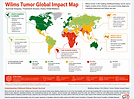
This briefing provides a visual overview of the global impact of Wilms tumor, illustrating significant differences in childhood kidney cancer survival and access to treatment across countries and regions. The global map highlights how children in many high-income countries achieve survival rates exceeding 90% when they have access to early diagnosis, specialized treatment and comprehensive follow-up care, while children in some low- and middle-income countries continue to experience substantial barriers to diagnosis, treatment, supportive care and long-term survivorship services.
Designed as an accessible global reference, the map compares survival and healthcare challenges across North America and Europe, Latin America, Sub-Saharan Africa, Asia, and the Middle East and North Africa, helping demonstrate how geography, healthcare capacity and treatment access can influence outcomes for children with Wilms tumor.
Key Highlights include:
a) Global Wilms Tumor Survival Rates;
b) Childhood Kidney Cancer Survival Inequality;
c) North America & Europe;
d) Latin America;
e) Sub-Saharan Africa;
f) Asia;
g) Middle East & North Africa;
h) Early Diagnosis & Referral;
i) Medicine Access & Supply;
j) Quality Surgery, Pathology & Radiotherapy Access;
k) Treatment Completion & Support;
l) Follow-Up & Survivorship Care.
The map reinforces an important global childhood cancer message: where a child is born can have a major impact on their chances of surviving childhood kidney cancer, despite Wilms tumor being one of the most treatable childhood cancers when timely, comprehensive care is available.
This WCF guide is for educational purposes only and is released as part of the World Health Organizations (WHO) Global initiative for Childhood Cancer (GICC). It is based on international pediatric oncology standards in Canada, the United States and Europe. Seek advice from a qualified medical professional should you have any concerns or questions. © World Health Organization (WHO). Used with permission in collaboration with the Wilms Cancer Foundation (WCF). “CureAll” is part of the WHO Global Initiative for Childhood Cancer (GICC).
Available languages:
English | Français | Deutsch | Italiano | Español | Português | فارسی | العربية | हिन्दी | 中文 | 한국어
Also available on the World Health Organization (WHO) Knowledge Action Portal:
English | Français | Deutsch | Español | Português | فارسی | العربية | हिन्दी | 中文 | 한국어
.png)
Click to View/ Download
Briefing (Series 3.1a)
Caregiver Fact Sheet: Why Nutrition Matters
This caregiver fact sheet provides practical, accessible guidance on the importance of nutrition during Wilms tumor and childhood kidney cancer treatment. It explains how appropriate nutrition and hydration can help children maintain strength, tolerate treatment, support recovery and cope with the increased demands placed on the body during cancer care.
Designed specifically for parents and caregivers, the guide provides simple everyday strategies for supporting a child's nutrition, including offering smaller and more frequent meals, choosing calorie- and protein-rich foods, encouraging fluids and remaining flexible when a child's appetite changes during treatment.
Key Highlights include:
a) Why Nutrition Matters During Wilms Tumor Treatment;
b) Daily Nutrition Care for Children;
c) Small, Frequent Meals and Snacks;
d) Calories and Protein for Strength and Healing;
e) Hydration and Fluid Intake;
f) Managing Changes in Appetite;
g) Treatment Nutrition Priorities;
h) Nutrition During Diagnosis, Treatment, Relapse and Survivorship.
The fact sheet also highlights hydration, calories, protein and electrolytes as important nutrition priorities and illustrates how nutritional needs remain relevant across diagnosis, active treatment, relapse and survivorship.
This WCF guide is for educational purposes only and is released as part of the World Health Organizations (WHO) Global initiative for Childhood Cancer (GICC). It is based on international pediatric oncology standards in Canada, the United States and Europe. Seek advice from a qualified medical professional should you have any concerns or questions. © World Health Organization (WHO). Used with permission in collaboration with the Wilms Cancer Foundation (WCF). “CureAll” is part of the WHO Global Initiative for Childhood Cancer (GICC).
Available languages:
English | Français | Deutsch | Italiano | Español | Português | فارسی | العربية | हिन्दी | 中文 | 한국어
Also available on the World Health Organization (WHO) Knowledge Action Portal:
English | Français | Deutsch | Español | Português | فارسی | العربية | हिन्दी | 中文 | 한국어

Click to View/ Download
Briefing (Series 3.1b)
Caregiver Fact Sheet: Helping Your Child Eat During Treatment
This caregiver fact sheet provides practical, plain-language guidance to help parents and caregivers support a child’s nutrition during Wilms tumor and childhood kidney cancer treatment. It explains why food and fluids are important during treatment and provides simple strategies for maintaining nutrition when a child’s appetite, food preferences or ability to eat may change.
Designed specifically for families navigating childhood cancer treatment, the guide covers small and frequent meals, suitable food choices, hydration, managing reduced appetite, food safety and signs that should prompt parents or caregivers to contact their child’s healthcare team.
Key Highlights include:
a) Why Food Matters During Wilms Tumor Treatment;
b) Helping Your Child Eat During Cancer Treatment;
c) Small, Frequent Meals and Snacks;
d) Foods to Try When Appetite Is Reduced;
e) Hydration During Treatment;
f) Managing Changes in Appetite and Food Tolerance;
g) Food Safety During Childhood Cancer Treatment;
h) When to Contact Your Child’s Care Team;
i) Practical Nutrition Support for Parents and Caregivers.
The guide emphasizes a simple and supportive approach to nutrition: families do not need to achieve a “perfect” diet. Instead, the focus is on offering food regularly, encouraging fluids, keeping the child comfortable and adapting to what they can tolerate during treatment.
It also highlights important food-safety precautions for children whose immune systems may be weakened and identifies warning signs such as inadequate food or fluid intake, persistent vomiting, weakness and signs of dehydration that should prompt contact with the child’s care team.
This WCF guide is for educational purposes only and is released as part of the World Health Organizations (WHO) Global initiative for Childhood Cancer (GICC). It is based on international pediatric oncology standards in Canada, the United States and Europe. Seek advice from a qualified medical professional should you have any concerns or questions. © World Health Organization (WHO). Used with permission in collaboration with the Wilms Cancer Foundation (WCF). “CureAll” is part of the WHO Global Initiative for Childhood Cancer (GICC).
Available languages:
English | Français | Deutsch | Italiano | Español | Português | فارسی | العربية | हिन्दी | 中文 | 한국어
Also available on the World Health Organization (WHO) Knowledge Action Portal:
English | Français | Deutsch | Español | Português | فارسی | العربية | हिन्दी | 中文 | 한국어

Click to View/ Download
Briefing (Series 3.1c)
Caregiver Fact Sheet: Importance of Nutrition
This caregiver fact sheet provides an accessible overview of the importance of nutrition for children undergoing Wilms tumor and childhood kidney cancer treatment. It explains how nutritional status can influence a child’s ability to tolerate chemotherapy and radiation therapy, support immune function, recover following surgery, maintain strength and energy, and achieve better long-term health and quality-of-life outcomes.
Designed to support parents and caregivers, the guide also explains the potential effects of malnutrition during pediatric cancer treatment and highlights the importance of integrating nutrition throughout the childhood cancer care pathway rather than addressing nutritional problems only after they develop.
Key Highlights include:
a) Why Nutrition Matters During Wilms Tumor Treatment;
b) Nutrition and Treatment Tolerance;
c) Supporting Immune Function and Recovery;
d) Nutrition During Chemotherapy and Radiation Therapy;
e) Nutrition and Recovery Following Surgery;
f) Risks Associated with Malnutrition;
g) Daily Nutrition, Hydration and Protein;
h) Nutrition During Diagnosis, Treatment, Relapse and Survivorship;
i) Macronutrient Balance and Treatment Nutrition Priorities;
j) When Parents and Caregivers Should Contact the Care Team.
The guide emphasizes that nutrition is an integral part of pediatric oncology care, with potential effects on treatment tolerance, recovery, physical resilience and longer-term health. It also provides practical guidance on frequent meals, hydration, protein, foods that may be easier to tolerate during treatment and signs that should prompt contact with the child's healthcare team.
The accompanying nutrition tables also provide a visual overview of macronutrient balance, treatment nutrition priorities and the importance of nutrition across diagnosis, treatment, relapse and survivorship.
This WCF guide is for educational purposes only and is released as part of the World Health Organizations (WHO) Global initiative for Childhood Cancer (GICC). It is based on international pediatric oncology standards in Canada, the United States and Europe. Seek advice from a qualified medical professional should you have any concerns or questions. © World Health Organization (WHO). Used with permission in collaboration with the Wilms Cancer Foundation (WCF). “CureAll” is part of the WHO Global Initiative for Childhood Cancer (GICC).
Available languages:
English | Français | Deutsch | Italiano | Español | Português | فارسی | العربية | हिन्दी | 中文 | 한국어
Also available on the World Health Organization (WHO) Knowledge Action Portal:
English | Français | Deutsch | Español | Português | فارسی | العربية | हिन्दी | 中文 | 한국어

Click to View/ Download
Briefing (Series 3.1d)
Caregiver Fact Sheet: Wilms Tumor Nutrition During Treatment
This caregiver fact sheet provides a practical, accessible guide to nutrition during Wilms tumor and childhood kidney cancer treatment. Designed for parents and caregivers, it explains why nutrition is an important part of pediatric oncology care and how appropriate food, hydration and nutritional support can help maintain growth, strength, immune function, healing, energy levels, treatment tolerance and recovery.
The guide also explores how a child's nutritional needs may change before treatment, during chemotherapy, radiation therapy and surgery, following surgery, during relapse treatment, and throughout survivorship and long-term recovery. It provides families with practical information about carbohydrates, healthy fats, calorie intake, hydration, maintaining body weight, managing treatment-related side effects and accessing additional nutritional support when required.
Key Highlights include:
a) Why Nutrition Matters During Wilms Tumor Treatment;
b) Macronutrient Balance During Treatment;
c) Carbohydrates and Energy;
d) Healthy Fats;
e) Nutritional Priorities During Treatment;
f) Preventing Malnutrition and Dehydration;
g) Managing Nausea and Appetite Loss;
h) Nutrition Before Treatment;
i) Nutrition During Chemotherapy, Radiation Therapy and Surgery;
j) Nutrition Following Wilms Tumor Surgery;
k) Nutrition During Relapse Treatment;
l) Nutrition During Survivorship and Long-Term Recovery;
m) Supporting Long-Term Heart and Kidney Health;
n) Individualized Nutrition Support and Pediatric Oncology Dietitians.
The guide emphasizes that nutritional needs can change throughout the Wilms tumor treatment pathway. Some children may require additional support through high-calorie foods, nutritional supplements, smoothies or shakes, small frequent meals or feeding support during intensive treatment, with pediatric oncology dietitians helping families develop individualized nutrition plans where appropriate.
It also highlights the continuing importance of nutrition after treatment. During survivorship, healthy nutrition can support physical recovery, growth and development, healthy weight maintenance, heart and kidney health, energy, physical activity and overall quality of life following childhood kidney cancer treatment.
This WCF guide is for educational purposes only and is released as part of the World Health Organizations (WHO) Global initiative for Childhood Cancer (GICC). It is based on international pediatric oncology standards in Canada, the United States and Europe. Seek advice from a qualified medical professional should you have any concerns or questions. © World Health Organization (WHO). Used with permission in collaboration with the Wilms Cancer Foundation (WCF). “CureAll” is part of the WHO Global Initiative for Childhood Cancer (GICC).
Available languages:
English | Français | Deutsch | Italiano | Español | Português | فارسی | العربية | हिन्दी | 中文 | 한국어
Also available on the World Health Organization (WHO) Knowledge Action Portal:
English | Français | Deutsch | Español | Português | فارسی | العربية | हिन्दी | 中文 | 한국어

Click to View/ Download
Briefing (Series 3.2a)
Global Clinical Nutrition Tool-Kit: Pediatric Wilms Tumor
This comprehensive clinical and caregiver toolkit provides a globally aligned framework for nutritional management in children with Wilms tumor, covering the complete care pathway from diagnosis and active treatment through relapse, recovery and long-term survivorship. It is designed as an education and planning resource for clinicians, NGOs, foundations and caregiver-facing pediatric oncology programs.
The toolkit explains why nutrition should be considered a foundational component of pediatric Wilms tumor care, rather than simply supportive care. Children undergoing cancer treatment must maintain the nutritional requirements of normal growth and development while also coping with increased metabolic demands, reduced appetite, gastrointestinal side effects and treatment-related toxicity. Poor nutritional status can affect infection risk, treatment tolerance, hospitalization and treatment interruption.
Key Highlights include:
a) Introduction to Nutrition in Pediatric Wilms Tumor;
b) Global Clinical Nutrition Framework;
c) Core Nutritional Principles;
d) Macronutrients, Micronutrients and Hydration;
e) Kidney Protection and Renal Nutrition Strategies;
f) Nutrition During Active Wilms Tumor Treatment;
g) Managing Nausea, Mucositis, Appetite Loss and Feeding Difficulties;
h) Food Safety During Cancer Treatment;
i) Relapse and High-Risk Wilms Tumor Nutrition;
j) Enteral and Parenteral Nutritional Support;
k) Survivorship and Long-Term Nutrition;
l) Clinical Nutrition Assessment and Intervention Pathway;
m) Caregiver Guidance and Practical Feeding Strategies;
n) Clinical Insights and Nutritional Outcomes;
o) COG/NWTS and SIOP Treatment Approaches;
p) Nutrition in Low- and Middle-Income and Resource-Limited Settings.
A particularly important feature of the toolkit is its focus on kidney protection. Because many children with Wilms tumor undergo nephrectomy and may subsequently live with a single functioning kidney, while some treatments can also affect renal function, the toolkit considers protein balance, sodium intake, electrolyte monitoring and hydration alongside the nutritional requirements necessary for childhood growth, tissue repair and recovery.
The toolkit also provides a structured Clinical Nutrition Pathway, progressing from baseline nutritional assessment and oral nutrition optimization through fortified foods and supplements, enteral nutrition, parenteral nutrition and continuing reassessment. The pathway shown on page 8 provides clinicians and care teams with a practical six-step framework for escalating nutritional support according to the child's changing clinical needs.
Importantly, the resource takes a global approach. It draws on pediatric oncology frameworks associated with the World Health Organization (WHO), Children's Oncology Group (COG) and International Society of Pediatric Oncology (SIOP), while recognizing that nutritional care must be adaptable to different healthcare environments. It specifically addresses the importance of locally available foods, caregiver education and practical nutritional strategies in low- and middle-income and resource-limited settings.
The toolkit extends beyond active treatment to relapse, high-risk disease and survivorship. For children experiencing relapse, it discusses the greater risk of nutritional decline during intensive and prolonged treatment and the potential need for earlier nutritional intervention. During survivorship, the focus shifts toward long-term kidney and cardiovascular health, healthy growth and development, physical activity and reducing future metabolic risks.
This WCF guide is for educational purposes only and is released as part of the World Health Organizations (WHO) Global initiative for Childhood Cancer (GICC). It is based on international pediatric oncology standards in Canada, the United States and Europe. Seek advice from a qualified medical professional should you have any concerns or questions. © World Health Organization (WHO). Used with permission in collaboration with the Wilms Cancer Foundation (WCF). “CureAll” is part of the WHO Global Initiative for Childhood Cancer (GICC).
Available languages:
English | Français | Deutsch | Italiano | Español | Português | فارسی | العربية | हिन्दी | 中文 | 한국어
Also available on the World Health Organization (WHO) Knowledge Action Portal:
English | Français | Deutsch | Español | Português | فارسی | العربية | हिन्दी | 中文 | 한국어
.png)
Click to View/ Download
Briefing (Series 5.7a)
Pediatric Renal Cancer Awareness: Disease, Symptoms, Treatment & Support
This awareness briefing provides an accessible overview of pediatric renal (kidney) cancer, particularly nephroblastoma (Wilms tumor), covering the disease itself, common signs and symptoms, treatment, the challenges faced by affected families and healthcare systems, and the importance of specialist support. It is designed to strengthen awareness and understanding of childhood kidney cancer among families, caregivers, healthcare communities and the wider public.
The briefing explains that Wilms tumor is the most common form of pediatric kidney cancer, accounting for approximately nine out of ten childhood kidney cancers. It describes how the cancer develops from immature kidney cells, usually affects one kidney, and can spread through the bloodstream or lymphatic system—most commonly to the lungs or nearby abdominal tissues.
Key Highlights include:
a) Understanding Pediatric Renal (Kidney) Cancer;
b) What Wilms Tumor (Nephroblastoma) Is;
c) How Wilms Tumor Develops;
d) Children Most Commonly Affected;
e) Common Signs and Symptoms;
f) Abdominal Swelling and Abdominal Masses;
g) Blood in the Urine and Changes in Urination;
h) High Blood Pressure and Other Possible Symptoms;
i) Signs of Cancer That Has Spread to the Lungs;
j) Importance of Prompt Medical Evaluation;
k) Wilms Tumor Treatment;
l) Surgery and Nephrectomy;
m) Kidney-Sparing Surgery in Selected Cases;
n) Chemotherapy Before or After Surgery;
o) Radiation Therapy for Higher-Risk Disease;
p) Relapse Monitoring and Long-Term Care;
q) Challenges Facing Children and Families;
r) Financial and Emotional Impact of Childhood Cancer;
s) Importance of Specialist Pediatric Oncology Care;
t) Multidisciplinary Medical and Survivorship Support.
A major focus of the briefing is recognizing potential symptoms. The most common sign described is a painless swelling or lump in the abdomen. Other possible symptoms include abdominal pain, fever, fatigue, loss of appetite, weight loss, high blood pressure, blood in the urine and changes in urination. Where disease has spread to the lungs, persistent coughing or shortness of breath may occur. Because these signs can resemble more common childhood illnesses, the briefing emphasizes prompt medical assessment of persistent or unusual symptoms.
The resource also introduces the principal approaches to Wilms tumor treatment. Treatment is tailored to the individual child and can include surgery—most commonly nephrectomy—chemotherapy and, in certain higher-risk situations, radiation therapy. It also explains that some treatment protocols use chemotherapy before surgery to shrink the tumor, while others administer chemotherapy following surgery.
Importantly, the briefing extends beyond the medical aspects of childhood kidney cancer to highlight the emotional and financial pressures experienced by families. Caring for a child through prolonged cancer treatment can affect parents' ability to work and generate income while everyday living costs continue, creating additional financial strain alongside the emotional impact of diagnosis and treatment. The document also considers the wider cost pressures placed upon pediatric healthcare services.
The Support section emphasizes that Wilms tumor should ideally be managed through a pediatric oncology centre or specialist renal tumor program. It identifies a multidisciplinary care team that may include pediatric oncologists, surgeons or urologic oncologists, radiation oncologists, nephrologists, oncology nurses and long-term survivorship specialists. It also identifies circumstances requiring prompt contact with the child's medical team, including fever during chemotherapy, sudden swelling or pain, breathing problems, severe fatigue and emotional distress.
This WCF guide is for educational purposes only and is released as part of the World Health Organizations (WHO) Global initiative for Childhood Cancer (GICC). It is based on international pediatric oncology standards in Canada, the United States and Europe. Seek advice from a qualified medical professional should you have any concerns or questions. © World Health Organization (WHO). Used with permission in collaboration with the Wilms Cancer Foundation (WCF). “CureAll” is part of the WHO Global Initiative for Childhood Cancer (GICC).
Available languages:
English | Français | Deutsch | Italiano | Español | Português | فارسی | العربية | हिन्दी | 中文 | 한국어
Also available on the World Health Organization (WHO) Knowledge Action Portal:
English | Français | Deutsch | Español | Português | فارسی | العربية | हिन्दी | 中文 | 한국어
.png)
Click to View/ Download
Briefing (Series 6.1a)
Wilms Tumor Surveillance & Follow-up Guidelines: Standard & High-Risk Pediatric Renal Tumor
This clinical briefing provides a detailed overview of surveillance and follow-up after treatment for Wilms tumor (nephroblastoma), with separate considerations for children classified as standard-risk and high-risk. It explains how ongoing clinical assessments, imaging, laboratory investigations and organ-specific monitoring can be used to detect recurrence, identify treatment-related late effects and support a child's long-term health and development.
The guide explains that surveillance has several important objectives: early detection of local or metastatic recurrence; monitoring the late effects of treatment; assessing renal, cardiovascular, pulmonary and endocrine function; and supporting growth, nutrition and general development. Particular attention is given to hypertension, proteinuria and other metabolic complications that may emerge following treatment.
Key Highlights include:
a) Objectives of Wilms Tumor Surveillance;
b) Standard-Risk and High-Risk Follow-up;
c) Surveillance Following Completion of Treatment;
d) Early Detection of Wilms Tumor Recurrence;
e) Monitoring for Local and Distant Relapse;
f) Risk Stratification and Follow-up Intensity;
g) Imaging Strategies for Wilms Tumor Survivors;
h) Abdominal Ultrasound and Chest X-ray Surveillance;
i) CT and MRI Imaging When Clinically Indicated;
j) History and Physical Examination (H&P);
k) Complete Blood Count (CBC) Monitoring;
l) Serum Chemistry and Metabolic Testing;
m) Urinalysis and Urine Protein Testing;
n) Glomerular Filtration Rate (GFR) and Kidney Function;
o) Monitoring the Remaining Kidney Following Nephrectomy;
p) Echocardiogram and Cardiac Surveillance;
q) Pulmonary Function Testing;
r) Endocrine, Hormonal and Puberty Monitoring;
s) Monitoring Growth, Development and Blood Pressure;
t) Long-Term and Late-Effects Follow-up.
A central feature of the briefing is its standard- and high-risk surveillance schematic, shown on page 4 of the document. This maps follow-up from the end of treatment through 60 months and incorporates clinical examinations, laboratory testing, chest and abdominal imaging, urine testing, renal function assessment, cardiac and pulmonary monitoring, hormonal testing and additional screening. The document also identifies circumstances in which further surveillance may be appropriate, including Beckwith-Wiedemann syndrome and nephroblastomatosis, as well as treatment-related reproductive and later-life screening considerations.
The briefing distinguishes between standard-risk and high-risk surveillance. Standard-risk follow-up generally involves less frequent imaging and laboratory testing, with emphasis on early recurrence detection and routine late-effect monitoring. High-risk follow-up involves more frequent and intensive surveillance for both recurrence and treatment-related complications.
The guide provides particular detail on imaging and laboratory monitoring. Surveillance may include abdominal ultrasound, chest X-ray and, when appropriate, CT or MRI. Laboratory monitoring can include complete blood counts, serum chemistry panels, urine testing and assessments of renal function. The purpose is not only to look for recurrence but also to monitor toxicity and changes in organ function resulting from previous treatment.
Because kidney health is particularly important following treatment for a renal tumor, the briefing explains urinalysis and renal-function surveillance in detail. Urine testing can help identify protein, blood and other potential indicators of renal complications, while GFR provides an assessment of how effectively the kidneys are filtering the blood. High-risk children may require more intensive renal surveillance because of factors such as nephrectomy, nephrotoxic chemotherapy, radiation exposure or reduced renal reserve.
The resource also recognizes that Wilms tumor follow-up extends beyond recurrence monitoring. Depending upon the treatment a child received, surveillance may need to assess cardiac, pulmonary, endocrine and reproductive health, particularly following exposure to anthracycline chemotherapy, radiation or other intensive therapies. The guide therefore introduces echocardiograms, pulmonary function tests and endocrine/hormonal assessments as components of risk-adapted follow-up.
Importantly, surveillance is presented as a long-term process rather than simply a series of cancer scans. The briefing describes an intensive phase during the first 2–3 years, a moderate phase during years 3–5, and a long-term or late-effects phase extending from approximately five years to 10 years or longer depending upon treatment. High-risk patients may remain under more frequent and prolonged follow-up.
The guide also highlights the importance of growth and development monitoring, blood-pressure assessment, psychosocial and educational support, vaccination, family education, renal care and awareness of possible relapse symptoms as children progress from active oncology surveillance toward longer-term survivorship care.
This WCF guide is for educational purposes only and is released as part of the World Health Organizations (WHO) Global initiative for Childhood Cancer (GICC). It is based on international pediatric oncology standards in Canada, the United States and Europe. Seek advice from a qualified medical professional should you have any concerns or questions. © World Health Organization (WHO). Used with permission in collaboration with the Wilms Cancer Foundation (WCF). “CureAll” is part of the WHO Global Initiative for Childhood Cancer (GICC).
Available languages:
English | Français | Deutsch | Italiano | Español | Português | فارسی | العربية | हिन्दी | 中文 | 한국어
Also available on the World Health Organization (WHO) Knowledge Action Portal:
English | Français | Deutsch | Español | Português | فارسی | العربية | हिन्दी | 中文 | 한국어
.png)
Click to View/ Download
Briefing (Series 6.2a)
Wilms Tumor Relapse: Factors, Treatment Options & Long-term Care
This briefing provides a plain-language overview of Wilms tumor relapse, explaining why kidney cancer can sometimes return after a child has completed treatment and achieved remission. It examines when relapse is most likely to occur, the areas of the body where recurrent Wilms tumor may be found, factors that can influence recurrence risk, possible signs and symptoms, treatment options following relapse, and the importance of continued surveillance and long-term survivorship care.
The guide explains that relapse can occur when cancer cells survive initial treatment and later begin to grow again. Factors such as tumor biology, histology, genetic changes, stage at diagnosis, response to chemotherapy, completeness of surgical removal, residual disease and interruptions to treatment may influence the likelihood of recurrence.
Key Highlights include:
a) Understanding Wilms Tumor Relapse;
b) Why Wilms Tumor Can Return After Treatment;
c) When Wilms Tumor Relapses Most Commonly Occur;
d) The First Two Years After Treatment and Relapse Risk;
e) Late Wilms Tumor Relapse;
f) Common Sites of Wilms Tumor Recurrence;
g) Lung Relapse;
h) Abdominal and Local Relapse;
i) Factors Affecting Wilms Tumor Relapse Risk;
j) Favorable and Unfavorable Histology;
k) Anaplastic Wilms Tumor and Relapse Risk;
l) Genetic and Molecular Risk Factors;
m) Stage at Diagnosis and Recurrence Risk;
n) Response to Initial Chemotherapy and Surgery;
o) Residual Disease and Treatment Completion;
p) Signs and Symptoms of Possible Wilms Tumor Relapse;
q) How Recurrent Wilms Tumor Is Detected;
r) Imaging and Follow-up After Treatment;
s) Treatment Options for Relapsed Wilms Tumor;
t) Chemotherapy for Wilms Tumor Relapse;
u) Surgery for Recurrent Wilms Tumor;
v) Radiation Therapy Following Relapse;
w) High-Dose Chemotherapy and Stem Cell Support;
x) Prognostic Factors Following Wilms Tumor Relapse;
y) Long-term Follow-up and Survivorship Care.
The briefing emphasizes that most Wilms tumor relapses occur within the first two years after treatment, making this the highest-risk period for recurrence. The likelihood generally decreases after the second year and becomes significantly lower after five years, although late relapse can occasionally occur. Routine follow-up imaging is important because recurrent disease may be identified before a child develops noticeable symptoms.
The guide identifies the lungs as the most common site of relapse, while recurrence may also occur in the abdomen or original kidney area and, less commonly, in the bones, liver or brain. Possible symptoms depend upon the location of recurrence and can include persistent cough, shortness of breath or chest pain with lung relapse; abdominal swelling, a lump, pain, vomiting or weight loss with abdominal relapse; and more general symptoms such as fatigue, fever and loss of appetite.
A particular feature of the briefing is its explanation of risk factors for Wilms tumor relapse. The visual chart on page 7 illustrates how relative relapse risk decreases as the number of years following treatment increases, while distinguishing favorable from anaplastic histology. The same page also presents a stage-based table showing the general progression from lower relapse risk in Stage I through higher risk in Stage IV, with Stage V described as variable. The guide additionally identifies unfavorable/anaplastic histology and certain genetic markers, including loss of heterozygosity at chromosomes 1p or 16q, as relevant risk factors.
The document also explains how relapse may be detected. Scheduled surveillance can include chest X-rays or CT scans, abdominal ultrasound or CT/MRI, physical examinations, and blood and urine tests. Follow-up is generally most intensive during the first two to three years following treatment.
Importantly, the guide emphasizes that relapsed Wilms tumor can still be treatable. Treatment is individualized according to where the cancer has returned, how long after initial treatment the relapse occurred, therapies previously received and the biology of the tumor. Management may involve chemotherapy using different or more intensive drug combinations, surgery to remove recurrent disease, radiation therapy and, in some higher-risk or repeated-relapse situations, high-dose chemotherapy with stem cell support.
Examples of chemotherapy drugs identified within the guide include ifosfamide, carboplatin, etoposide, cyclophosphamide and doxorubicin where previous exposure allows. Surgery may be considered when recurrent tumors can be removed, while radiation may be used when it was not previously given or when recurrent disease can be appropriately targeted.
The briefing extends beyond treatment of recurrence to address long-term follow-up and survivorship. Ongoing care can involve physical examinations, imaging, blood and urine testing and monitoring for treatment-related late effects involving kidney function, heart health, growth and development, fertility and the risk of secondary cancers. Surveillance is generally more frequent during the first two years and becomes progressively less frequent as the child remains cancer-free.
The follow-up table on page 10 provides a general example of this progression, showing imaging approximately every three months during years 0–2, every 4–6 months during years 3–5, and approximately annually after five years, while emphasizing that survivorship monitoring continues even as relapse risk becomes much lower.
The guide also discusses prognosis after relapse, emphasizing that outcomes vary according to the type, location and timing of recurrence and that multiple relapse can be more challenging. Importantly, the document stresses that many children can still be cured following relapse and treatment approaches have improved over time.
This WCF guide is for educational purposes only and is released as part of the World Health Organizations (WHO) Global initiative for Childhood Cancer (GICC). It is based on international pediatric oncology standards in Canada, the United States and Europe. Seek advice from a qualified medical professional should you have any concerns or questions. © World Health Organization (WHO). Used with permission in collaboration with the Wilms Cancer Foundation (WCF). “CureAll” is part of the WHO Global Initiative for Childhood Cancer (GICC).
Available languages:
English | Français | Deutsch | Italiano | Español | Português | فارسی | العربية | हिन्दी | 中文 | 한국어
Also available on the World Health Organization (WHO) Knowledge Action Portal:
English | Français | Deutsch | Español | Português | فارسی | العربية | हिन्दी | 中文 | 한국어
What other Resources you need to know about
Advocacy Resources
Awareness Campaigns
Explore the Wilms Cancer Foundations catalog of awareness campaigns, reciprocal links and icons, etc. in support of Wilms Tumor.
Access the Wilms Cancer foundations awareness campaigns
Support Resources
Treatment Centres
Find contact information on pediatric oncology/ childhood cancer treatment centres & clinics around the world for professional support on Wlms tumor (nephroblastoma).
Access the Wilms Cancer Foundations treatment centre database
Useful Links & External Resources
Find links to third resources (support groups, imformation hubs, programs, etc) for children, parents, caregivers and healthcare professionals tackling Wilms Tumor (nephroblastoma).
Access useful links &external resources
Support Programs
Find support programs for children, parents, caregivers and healthcare professionals tackling Wilms Tumor (nephroblastoma).
Access support programs database
Educational Videos
Learn about Wilms Cancer Foundations educational video library in support of the WHO and Global Initiative for Childhood Cancer to support patients, parents & caregivers tackling Wilms Tumor (nephroblastoma).
Read more and gain access to educational literature (fact sheets, briefings, reports, etc.)
Patient Resources
Patient Interviews
Watch patient interviews for candid views on diagnosis, treatment, relapse, recovery, long-term effects, etc. of Wilms Tumor on the Wilms Cancer Foundations dedicated video channel.
Patient Experiences
Hear about real patient & caregiver experiences from diagnosis, treatment, relapse, recovery and post treatment care of Wilms Tumor (nephroblastoma).
Patient Groups (for Children)
Active patient engagement and peer groups (Wilms Warriors) to help children connect with others with Wilms Tumor (nephroblastoma).
Access patient groups & forums for children
Parents & Caregiver Resources
Parent Interviews
Watch parent interviews for candid views on diagnosis, treatment, relapse, recovery, long-term effects, etc. of Wilms Tumor on the Wilms Cancer Foundations dedicated video channel.
Watch parent interviews
Parent Experiences
Hear about real parent & caregiver experiences from diagnosis, treatment, relapse, recovery and post treatment care of Wilms Tumor (nephroblastoma).
Explore parent experiences
Parent Groups
WIlms Tumor online parent groups (Wilms Support Network) and forums to connect and share issues related to Wilms Tumor (nephroblastoma).
Access parent groups & forums for parent & caregivers
Small nutritional changes can make a big difference
Supporting your child’s nutrition is one of the most important ways you can help during treatment.